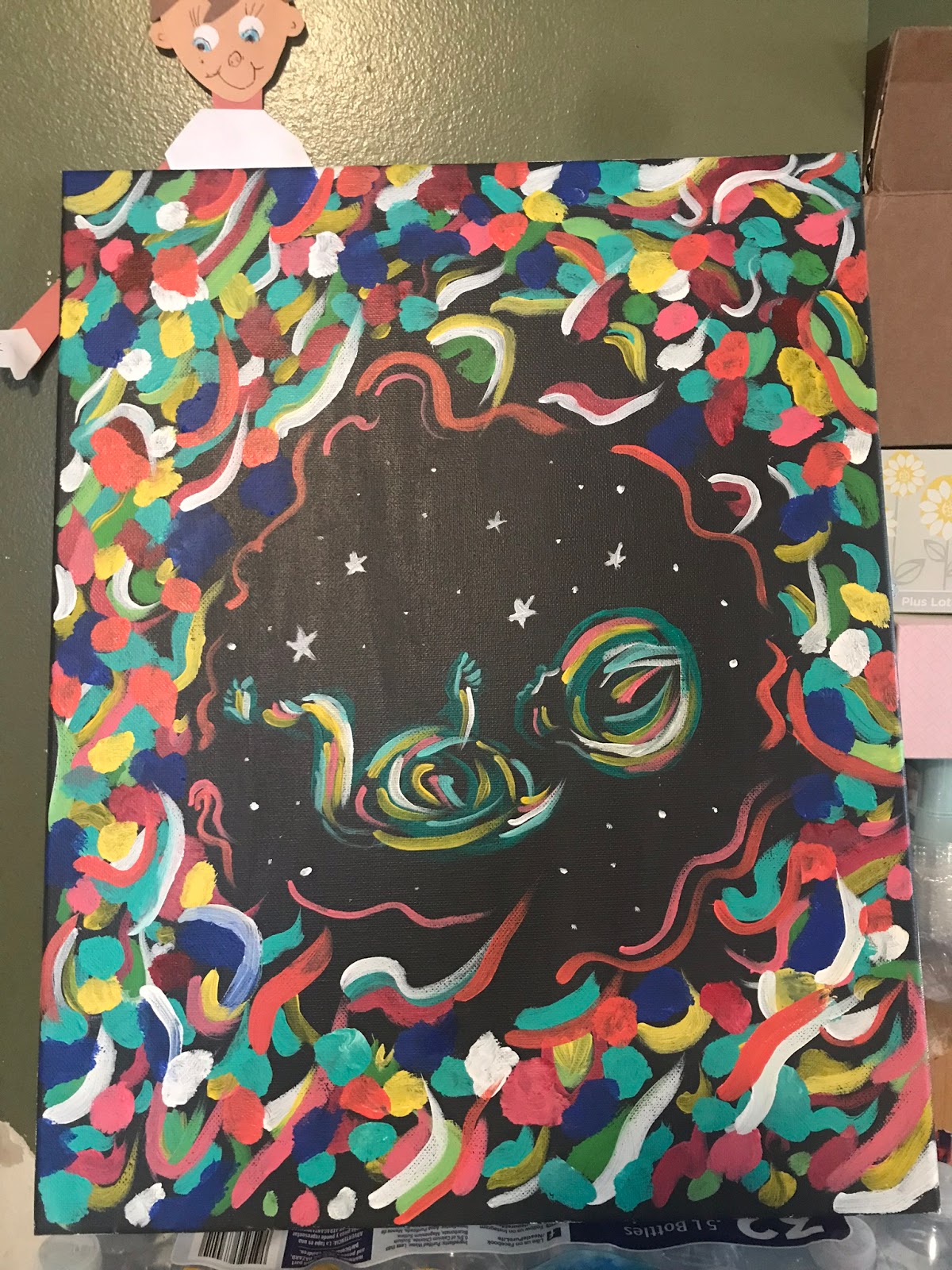
My semester project was centered on Laura Steerman’s work, an Irish mother of three who makes unique sonogram depictions for parents. Laura's hobby additionally encouraged Laura to team up with Irish philanthropy Féileácin, which supports parents who've endured unsuccessful labors. So now, a level of each work's profit is given to the association. Laura Steerman's own ultrasounds are what encouraged her to paint these. Throughout the process of researching ultrasounds I found that there is a deeper underlying issue with fetal care around the world. Access to ultrasound has expanded essentially in asset constrained settings, including the creating scene be that as it may, there remains an absence of sonography instruction and ultrasound-prepared doctor support in creating nations. The absence of sonogram accessibility and fetal wellbeing to absence of sustenance and nourishment in third world nations is at an all time high. I decided to paint my own ultrasound to demonstrate a better place in which a baby is thriving with successful fetal care. Children's hunger and fetal wellbeing are threatened. Lack of healthy sustenance is a huge issue in creating nations. Without significant assets, numerous men, ladies and kids head to sleep hungry. Handling lack of healthy sustenance ought to be a need for everybody, particularly pregnant ladies. A lady's nourishments impacts both her wellbeing amid pregnancy and the strength of her child. Without legitimate consideration, she is defenseless to diseases and her infant's wellbeing is in danger. Lack of healthy sustenance amid pregnancy can cause obliterating results. This prompts the infant being conceived at a low birth weight, which frequently prompts serious psychological and formative shortfalls. On the off chance that a baby ends up malnourished in the belly, the harm can be lasting. Improving sustenance is a venture that could
spare the lives of ladies around the globe. It will also diminish the quantity of birth deformities and incapacities found in infants and youthful kids. In many creating nations, nourishment is fundamental to advancing a glad and solid way of life where no individual hits the sack hungry. Subjective advancement is affected by numerous variables, including nourishment. There is an expanding gathering of writing that proposes an association between improved sustenance and ideal cerebrum work. Supplements give building obstructs that assume a basic job in cell expansion. Ultrasound assumes an essential job in wellbeing upgrades around the world, as it has took into account early conclusion of both fetal and maternal wellbeing conditions, prompting an expanded survival rate, particularly on the planet's more unfortunate countries.
I found an article on US National Library of Medicine titled Perceived barriers in the use of ultrasound in developing countries.
“Our study identifies current barriers to ultrasound use in low-resource settings including lack of ultrasound training and sufficient equipment, as well as lack of access to reliable machine maintenance. Further research should be directed towards developing concise, content-rich distance learning modules, programs for creating sustainable training opportunities, and a recognized international standard of assessment and certification in ultrasound.”
Suppliers in the creating world keep on experiencing huge obstructions to the utilization of ultrasound, including absence of preparing, machine glitch, and powerlessness to perform upkeep on existing machines.
Citations: Shah, S., Bellows, B.A., Adedipe, A.A., Totten, J.E., Backlund, B.H. and Sajed, D. (2015). Perceived barriers in the use of ultrasound in developing countries. Critical Ultrasound Journal, [online] 7(1). Available at: https://www.ncbi.nlm.nih.gov/pmc/articles/PMC4485671/.
Acts of Resistance: Activist, Interlopers, and Pranksters
May 7th,2019
Not everyday do we have possibility to better our lives. Although there is many way to be successful, it’s always a challenge doing so.Especially when we have to caporate our strength and weaknesses. Students may not have the opportunity to go to college due to financial problems. But when a low income family takes that step . It puts a risk in debt due to students loan. And these risk can be beneficial due to the commitment the students gives. These atrociously Expenses of college puts A student in a predicament where they are forced to pay an amount of money over a long period of time. Living their life still paying these students debts. Some even pass away with still having to pay debt from
College . Bottom line is that shouldn’t be paying to be successful and to make a life for themselves. Students disconnected from the reality of how long it will take to pay off the loans. “The standard repayment plan for federal student loans puts borrowers on a 10-year track to pay off their debt, but research has shown the average bachelor's degree holder takes 21 years to pay off his or her loans. Under federal income-based repayment options, remaining debt is forgiven after 20 years.”-U.S News.
Your sister, your daughter, your mother could be next.
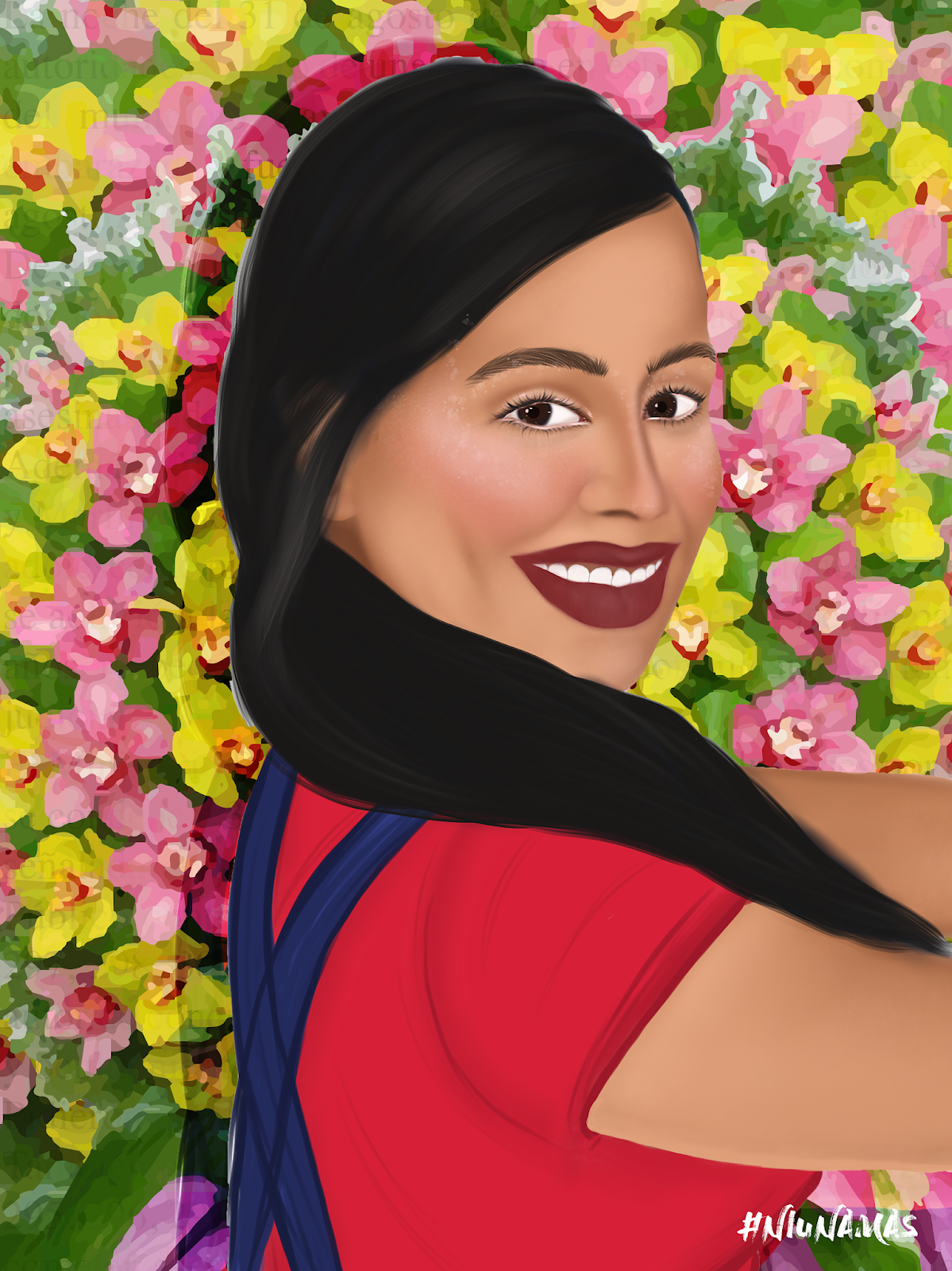
How many of you know the term feminicide? The term feminicide was firstly introduced by Jill Radford and Diana Russell to represent the “gendered and endemic nature of violence against women” (The Mantle). In Dominican Republic, it is a growing phenomenon that does not show any signs of slowing down. Every year more than a hundred women are assassinated by their spouses, boyfriends, and/or a male whom was previously involved in their lives. For my final project, I will be delving into this issue and the lack of action from the Dominican society residing in Dominican Republic as well as in the United States. The project consists on a series of posters, some of them being illustrations of the victims and others being typographic posters which challenge the viewer to think about their lack of contribution in regards to the matter.
From an early stage in my life, I became aware of masculine superiority and its protection coming from a dominant patriarchal system. Feminicides being justified with the sentence “She must have done something to trigger him” or “she could have avoided this situation”. Our chauvinist culture continues to enable the brutal behaviors against women, and victimize the perpetrators and nobody seems to pay attention. This act of resistance will make you question your involvement in your community, it will shame you for settling with the idea that the jurisdictional system will take care of the issue when in reality, they are at fault. You have a mother, maybe a sister, a cousin, an aunt, a friend; what if they were the victims? Do you rather take action before it affects your loved ones? Or will you do it now that is affecting strangers? According to ‘Acento’, a Dominican newspaper, from the year 2005 to 2017 more than two thousand and four hundred women were killed; two hundred women on average per year (Mery Dorrejo). That is two hundred lives that were not protected by any sort of legislation before or after the occurrence. We do not count on any laws to regulate gender-based crimes, although they claim to, we do not officially have any specific penalties for these crimes (Global Americans).
It is apparent that as a country we cannot dismantle the jurisdictional system which continues to fail women. This project also serves as a push for my community, to be motivated to research about what is happening inside courtrooms and outside in the streets. It is a wake-up call for a population that ignores their surroundings and that chooses not to be politically involved with anything due to fear and impotence. I want my audience to think about power, the power we possess and we think we don’t, and the power patriarchy holds over us. “The capacity to see power matters’ said Nato Thompson in his ‘Seeing Power’ book, it is a skillset that is needed to dissect its importance and effects, and how it operates in our culture. In order for us to challenge it and advocate for issues such as feminicide, we must be capable of recognizing it. By utilizing the same shaming approach which the Guerilla Girls used, I intend to make people uncomfortable with statements whilst also positively depicting those victims whom were full of life and were gone too soon. Link to project : https://www.instagram.com/kcallmonte/
“Works Cited”
·Thompson, Nato. Seeing Power: Art and Activism in the 21st Century. Melville House, 2015.
Acts of Resistance: Activist, Interlopers,
and Pranksters SP 19
Professor Cacoilo
May 7, 2019
Final Semester
Project
Throughout
this semester I was thinking of how to demonstrate being a role model in
various projects. What I decided to do was to make a video/documentary of the youth
at my job, the Jersey City Recreation Boxing Program. What better way to show
the meaning of being a role model than in the sport of boxing? Many people
would right away assume that boxing is a tough sport and shouldn’t be something
that kids should pursue at an early age. In my opinion, boxing is a great sport
to follow for many reasons. Not only does it show you how to protect yourself
and possibly compete in different tournaments, but it shows people, specifically
the youth, how to become discipline, how to become a leader, and most importantly
how to become a role model. Having these qualities at a young age is very
important because not only does it show them the importance of having these traits,
but it shows them how to spread these qualities to others. Renee Cox is a
perfect example of what it is to spread qualities that she had to assist others
who were in need and awareness, so everyone would know how important this was
in society. Renee Cox is one of the most controversial African American artists
working today using her own body, both nude and wearing clothes to celebrate
black womanhood and criticize a society she often views as racist and sexist. Cox
made herself the center of attention by dressing in the colorful attire of a
black superhero named Raje. Her art piece was titled The Liberation of Lady J and
UB. Cox's Raje rescued the black stereotyped advertising figures of Uncle Ben
and Aunt Jemima from their products, labels. She demonstrates her ability of being
a role model by being in the middle of Uncle Ben and Aunt Jemima, while she has
them by her hands. “An anti-capitalist can act anywhere, as there is no space
that does not speak the values of capital” (Interventionist pg. 117). This
piece was created to show people that they can be open-minded from things that
have been exposed upon them like consumption of products that are advertised to
be healthy for consumptions on advertisements. Cox demonstrates this ability by
allowing her artwork to have a representation of what leadership should
represent. We teach the kids in the community how to vouch for themselves and
how to become independent. Another artist that I connected to my semester
project was Lauren Greenfield. Greenfield’s series THIN is a photographic essay
and a documentary film about the treatment of eating disorders. It shows a
greater understanding of the difficulty of eating disorders, they are not
simply about food or body image or self-esteem, but a tangle of personal, family,
cultural and mental health issues. “Our age of manipulation produces on
inexorable quandary” (Seeing Power pg. 97). Greenfield compares the difficulty
of eating disorders to the challenging subject in homes and schools. This is comparable
to the life difficulties that the youth bring with them when they enter the gym
for the first time. The goal throughout the video was not for them to pursue in
becoming a professional boxer but to use the tools of discipline, leadership,
and being a role model for school, home, themselves, and most importantly their
future. We want them to become leaders in this world and the first step into
becoming a leader is having discipline because without that you won’t be able
to move ahead. Every day we motivate the youth and the goal is to impact them
so they can see that all were trying to do is uplift them. Our job is to be the
role models they truly deserve.
The Liberation of Lady J and UB by Renee Cox
THIN by Lauren Greenfield
Jersey City Recreation Boxing Program
Jersey City youth Ethan Montenegro showing off his skills
Acts of Resistance: Activist, Interlopers, and pranksters
Feast and Famine
In the exhibition Feast and Famine, there were a lot of projects by different artist that caught my attention. These art pieces were used to tell a story. Food was used as a way to symbolize economics, politics, body image and environment. All the art work in the exhibition brought attention to the impact of food production and food justice. Every piece in exhibit brought awareness about food industry and issues of food production from an artist’s view. It was a little hard for me to directly relate my semester projects to the projects displayed in the exhibit. But after looking at some of the projects shown in exhibit from different perspective, I was able to connect three of the projects to my project.
The two main projects that I would be writing about are “Thin” by Lauren Greenfiel and Stitches of Strength. The project “Thin” by Lauren Greenfiel is a documentary that bring awareness about eating disorder. A series of photographs were displayed in the exhibit from the documentary. These were the pictures of victims. These pictures expressed their stories behind eating disorder. There were pictures from before and after those women had undergone the treatment, showing women are only acceptable if they are seen and act certain ways. Ways that make them desirable in society’s eyes and if not, they are pressured to change themselves or else they are not valuable. This is directly related to my project as in how women are supposed to fit in society. What they should eat, wear, act and what career is fit for a woman. Pressure of fitting in a society makes it hard for them to follow their desires, no matter if it is picking a sport in middle school or a career in life. This project doesn’t only reflect how women are seen as objects, but one has to look at the bigger picture of how it targets women to be certain way their entire life.
"THIN" by Lauren Greenfiel
Second project that I have picked is Stitches of Strength. This piece was very powerful and stood out to me. It was a quilt made up different color of pieces with words written on it. These words were written by the victims of sexual assault. Victims of social assault often stay quiet or suffer within because it’s hard for them to explain how they feel. And no one can actually understand unless they have experienced it themselves. This project is not directly related to my semester project but to one of many aspects of project. My project is about the how we can encourage women of color and overall women to pursue their dreams when it comes to their careers. But it is hard because of gender inequality and most of STEM careers to known to be “masculine.” But as more women have entered in these fields of work has entered, number of sexual assaults has also increased. According to statics, 79% of the respondents who reported having experienced workplace sexual harassment were female; 21% were male. This ratio shows why women hesitates from pursuing their careers in male dominant fields.
Stitches of strength
What were they wearing with victims messages
Namra Arshad
Acts of Resistance: Activist, Interlopers, and pranksters
Professor Cacoilo
“Complaint” and project connection
My semester project relates to women of color and their role in STEM. My project reflects on life of those women who gave their life for the betterment of science but were never recognized in society. Raising the questions of gender equality in these careers known to be “masculine.” This inequality raises questions for young girls when they are deciding their career choices and mostly are recommended to pick a career that is suitable for them. For my project, I have created an Instagram page that is building up to reflect light on women of color and the roles they played but were over shed by masculine figures. My mission is to help encourage women of color and teenage girls to recognize their true passion and to help them overcome these stereotypes that could be holding them back from pursuing these fields.
The guerrilla girls and yes men directly relate to my project as in both reflect light and raise awareness about social and political issues of society. Yes Men use their platform to expose the truth by lies. But Guerrilla Girls activism relates more to my project than Yes Men. The Guerilla Girls focuses more on issues that are faced by women of color and overall women in any field of work.
The Guerrilla Girls are feminist activist artists that wear gorilla masks. Their mission is to bring attention to the women artist and especially artists of color to expose gender inequality.
My project reflects light on why is it so hard for women of color to pursue their dreams and if few of them made it to the top by facing the enormous struggles like The Guerrilla Girls, why were they not recognized in their field of work to help and encourage the next generation of female scientists. The posters below from the book Confessions of The Guerrilla Girls shows why women in any field of life are not recognized. Because their work is never given credits or shown appreciations and is always over shed by masculine power.
Bibliography
Girls, Guerrilla. Confessions of The Guerrilla Girls. HarperPerennial, 1995.
There is much misinformation about Genetically Modified Organisms, also known as GMOs.This writing will
focus on plant GMOs related to agriculture.Some rumors have been spread that GMOs cause cells to mutate, but this
is false (Norris, Harvard University).These rumors really are not founded on any facts.GMOs have been studied for decades and no
harmful effects have been found.GMOs can
be created by selectively breeding a plant to insert a gene (cross pollination)
or inserting genes through transgenic methods in the lab.The
average large sized watermelon in stores is roughly 20 lbs. (Prakash, Online).Before we created our current watermelon (GMO),
the average watermelon was naturally around 50 mm, or 2 inches in diameter around 3,000 B.C. and prior. If you can imagine a 2-inch diameter watermelon weighs nothing close to 20 lbs. (Kennedy, Online).Selective breeding
is not random.We have been doing it for
thousands of years through agriculture, and we have dramatically changed the
gene pull of fruits and vegetables, and even native and wild type plants in
nature. If you don’t want to eat anything that is connected to a GMO, you will
starve to death. Everything you eat is
really a GMO. If you eat meat too, a fact for you is that 70% of all livestock in the USA eat GMO plants. One way or another you are going to eat GMO (Van Eenennaam, Online).
I Made varying sized flyers and posters of GMO Facts as seen
above
Transgenic methods
have been done for the last few decades.A desired gene can be isolated and put into the DNA of the plant.It could be for a trait such as insect
resistance, height, a new vitamin the plant can produce, increased shelf-life, larger fruit, and manifold other traits.It’s my supposition being a biologist that many of the myths and fears
in genetic engineering or transgenic methods to create GMO plants is based off of mutation myths as
mentioned above. DNA and genes break
down the same in the body, it doesn’t matter what genes they are.All genes consist of ATGC base pair patterns
and no matter what the pattern they are in, they are digested the same.GMOs never caused any harmful effects on pregnancy
either.Studies have been extensively
done.As prior mentioned, DNA is DNA regardless
and digests the same.It is the same
thing in the body if you eat a GMO plant versus an organic product. Why pay more for organic when you are eating
the same thing!Let’s not forget the fact that GMOs increased
crop yields over the last 20 years and helped feed the world (Norris, Harvard
University).In addition, GMOs have
reduced pesticide use by 8.1% over 20 years (Brookes & Barfoot).
The closest connection I could get to my activism topic was through Sean Raspet and Lucy Chinen with nonfood bar, whom we seen an exhibit in the Paul Robeson Galleries at Express Newark. I love how they brought science into the art of everyday activism by promoting their bars not only as a food algae based alternative, but an art exhibit. The only other similar thing I found to this was in the "Free Range Grain Project" where they tested rice to see if it was GMO rice or not, however they were just against GMOs and are a group that wants more people to know what GMOs are in products by labeling, which is fair to ask (Interventionist pg. 116). There are many myths about GMOs and the majority of them are false. GMOs are not harmful and for decades transgenic GMOs have been extensively studied by Universities and facilities like Harvard University. The only downfall of GMOs is the lack of knowledge the general public has about them and how beneficial they are to our world. Hanging the posters (1st prototype)
The final product is out in the public:
Bibliography
Brookes, Graham, and Peter Barfoot. “Environmental impacts of genetically modified (GM) crop use 1996-2015: Impacts on pesticide use and carbon emissions.” GM crops & food vol. 8,2 (2017): 117-147. doi:10.1080/21645698.2017.1309490.https://www.ncbi.nlm.nih.gov/pmc/articles/PMC5443613/
Van Eenennaam, Alison L. “GMOs in animal agriculture: time to consider both costs and benefits in regulatory evaluations.” Journal of animal science and biotechnology vol. 4,1 37. 25 Sep. 2013, doi:10.1186/2049-1891-4-37. https://www.ncbi.nlm.nih.gov/pmc/articles/PMC4015968/
For a link to "GMOs the Truth from an Activist and Scientist." Powerpoint